
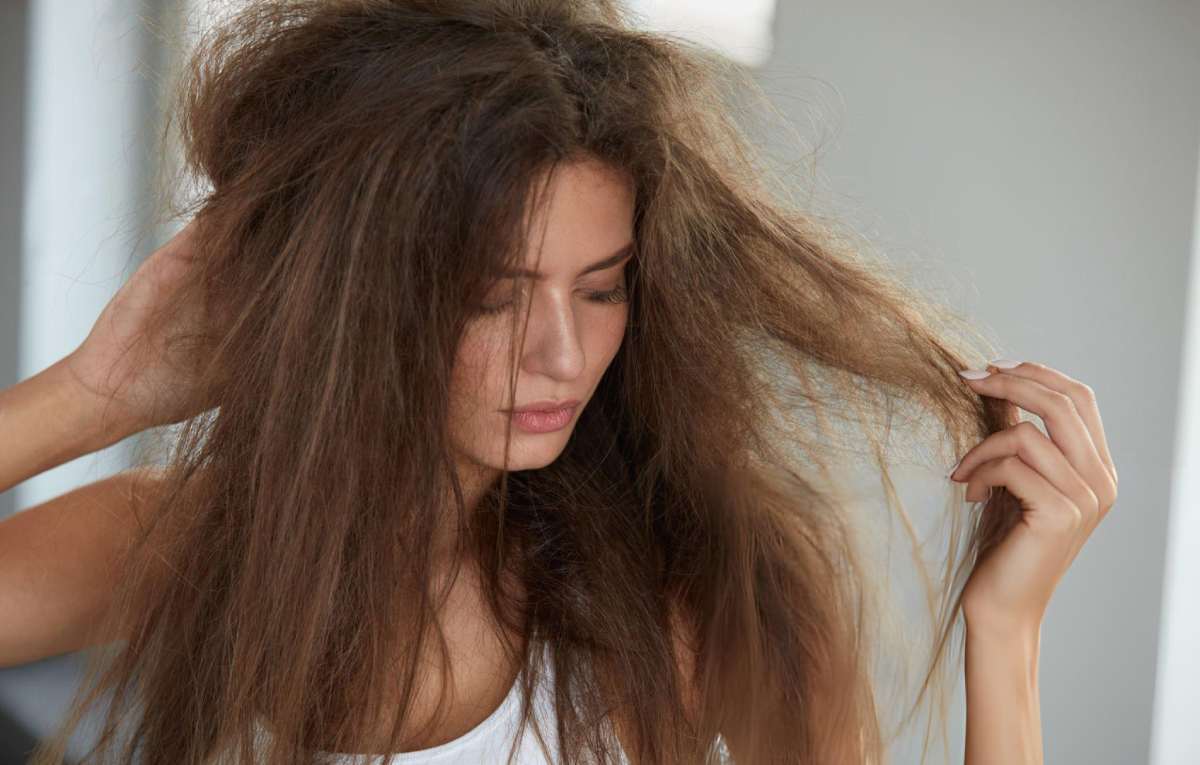

Hair is biologically “dead” once it leaves the follicle, which makes the concept of “repairing” it a unique challenge. Unlike your skin, hair cannot heal itself. When we talk about Damaged Hair, we are talking about the structural degradation of the hair’s keratin protein and the lifting of its protective outer layer, the cuticle.
In a world of high-heat styling, chemical processing, and environmental pollution, hair damage is almost inevitable. However, with the rise of “Bond-Building” technology and “Scalp Care” rituals, we can now mimic the hair’s natural integrity. This article explores the science of hair trauma and the roadmap to restoration.
1. The Anatomy of Damage: What’s Actually Happening?
To fix damaged hair, you have to understand its three-layer architecture.
- The Medulla:The innermost pith (often absent in fine hair).
- The Cortex:The “muscle” of the hair. This contains the keratin bundles and the pigment. This is where the strength lies.
- The Cuticle:The “shingles” on a roof. These flat, overlapping cells protect the cortex.
In Damaged Hair, these shingles are lifted, chipped, or stripped away entirely. This exposes the cortex, allowing moisture to escape (leading to frizz) and the internal protein bonds to break (leading to breakage).
2. Identifying the Type of Trauma: Heat, Chemical, or Mechanical?
Not all damage is created equal. The treatment for a “bleach burn” is vastly different from the treatment for “friction breakage.”
Chemical Damage (The pH Disruption)
Chemical services like bleaching, perming, or relaxing work by opening the cuticle and changing the hair’s internal structure. If the pH is not properly balanced afterward, or if the chemicals are left on too long, the disulfide bonds—the “ladders” that hold the keratin together—are permanently broken. This results in “mushy” or overly stretchy hair when wet.
Thermal Damage (The Heat Shock)
Regular use of flat irons and blow dryers at temperatures above 185°C (365°F) causes a physical change in the hair’s protein. This is called “protein denaturation.” Once the keratin is “cooked,” it loses its elasticity and becomes brittle, leading to those “white dots” at the ends of the hair known as trichoptilosis (split ends).
Mechanical Damage (The Friction Factor)
This is the most underestimated form of damage. It’s caused by rough brushing, tight elastics, and sleeping on cotton pillowcases. This constant friction slowly “shaves” away the cuticle layers until the strand snaps.
3. The Bond-Building Revolution: Molecular Repair
For decades, we used “moisturizers” to fix damage. We now know that oil cannot fix a broken chemical bond. Modern Damaged Hair care relies on Bond-Builders.
These patented molecules (like Bis-Aminopropyl Diglycol Dimaleate) actually seek out broken disulfide bonds and “glue” them back together. Unlike a conditioner that sits on top of the hair, bond-builders work inside the cortex. For anyone with chemical damage, this is the non-negotiable first step in a restoration routine.
4. Protein vs. Moisture: The Great Balance
The most common mistake in treating damaged hair is over-using protein. This leads to “Protein Overload,” making the hair feel like straw.
- When you need Protein:If your hair feels limp, gummy, or overly stretchy when wet, it lacks structural integrity. Look for hydrolyzed keratin, silk amino acids, or wheat protein.
- When you need Moisture:If your hair is stiff, crunchy, and snaps easily, it lacks elasticity. Look for humectants like glycerin and emollients like argan or jojoba oil.
A modern Damaged Hair routine should alternate between these two: a protein treatment one week to “rebuild” and a deep conditioning mask the next to “soften.”
5. The Role of Porosity in Repair
“Porosity” refers to how easily your hair absorbs and retains moisture. Damaged hair is almost always High Porosity.
Because the cuticle is lifted, high-porosity hair sucks up water quickly but loses it just as fast. To treat this, you must use the L.O.C. Method (Liquid, Oil, Cream). By layering a water-based leave-in, then an oil, and finally a cream, you create a “synthetic cuticle” that traps the moisture inside the strand, mimicking the behavior of healthy, low-porosity hair.
6. Scalp Care as a Preventative Measure
While we cannot “heal” the hair that is already grown, we can ensure the hair currently forming in the follicle is as strong as possible. Scalp Care is the “preventative medicine” of hair health.
A congested, inflamed scalp produces “oxidative stress,” which results in a weaker hair cuticle from day one. Using scalp serums containing peptides and antioxidants ensures that the hair emerges with a tightly bound cuticle, making it naturally more resistant to the damage it will face from heat and styling.
7. The “Modern” Trim: Dusting vs. Chopping
The only true cure for a split end is scissors. However, the modern “Dusting” technique allows you to remove damage without losing length.
By twisting small sections of dry hair, the damaged ends “pop” out along the shaft. A stylist can then snip only those frayed ends. This prevents the split from “traveling” up the hair shaft, which is how a small amount of damage eventually turns into a major breakage disaster.
8. Environmental Protection: The New Frontier
We often forget that the sun (UV) and hard water (minerals) are constant sources of damage.
- UV Protection:UV rays act like a mild bleach, oxidizing the hair’s pigment and weakening the protein. Modern leave-ins now contain UV filters.
- Chelating Shampoos:If you live in a hard water area, calcium and magnesium build up on your hair, making it brittle. A “Chelating” or “Clarifying” wash once a fortnight removes these minerals, allowing your repair masks to actually penetrate the hair.
Conclusion
Treating Damaged Hair is a marathon, not a sprint. It requires a strategic balance of bond-building technology, the right protein-to-moisture ratio, and a “Scalp Care” mindset. By understanding the anatomy of your strands and protecting them from the “Big Three” (Heat, Chemicals, and Friction), you can restore your hair’s shine and strength.
